

Heute geöffnet 11–17 Uhr

years in lucerne

rwm-aussen-5

Richard Wagner in Tribschen

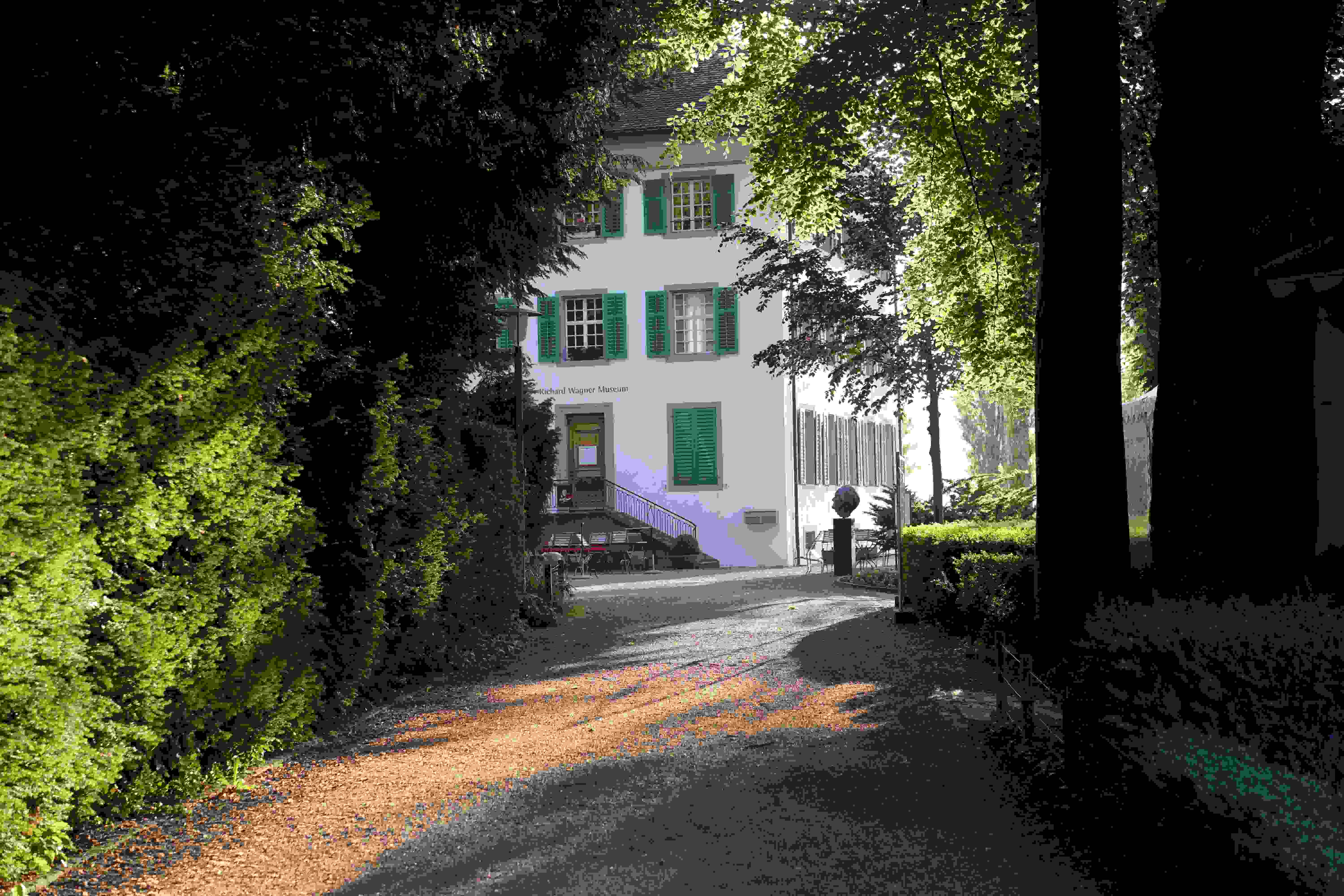
Richard Wagner chose the country house at Tribschen on the shores of Lake Lucerne as his home for six years. In April 1866, the composer moved into the house and filled it with life.


Surrounded by a park and situated directly on the lakeshore, this distinguished residence became Wagner’s home for a total of six years. Here he completed “Die Meistersinger von Nürnberg” and “Siegfried”, continued work on “Götterdämmerung”, and composed both the “Huldigungsmarsch” (“Homage March”) and the “Siegfried Idyll”. The latter was first performed on the staircase of the house on 25 December 1870 as a birthday surprise for his wife Cosima. It was also in Tribschen that Wagner revised his antisemitic essay “Das Judenthum in der Musik” (“Judaism in Music”).


One month after Richard Wagner moved to Tribschen, his lover Cosima von Bülow followed him there. At first, she visited only temporarily before returning to Munich, where her daughters and her husband Hans von Bülow lived. Eventually, however, Cosima decided to move to Tribschen permanently with her children. Their daughter Eva was born in 1867, and on 6 June 1869 Wagner’s only son, Siegfried, was born. Shortly afterwards, Hans von Bülow agreed to divorce Cosima.
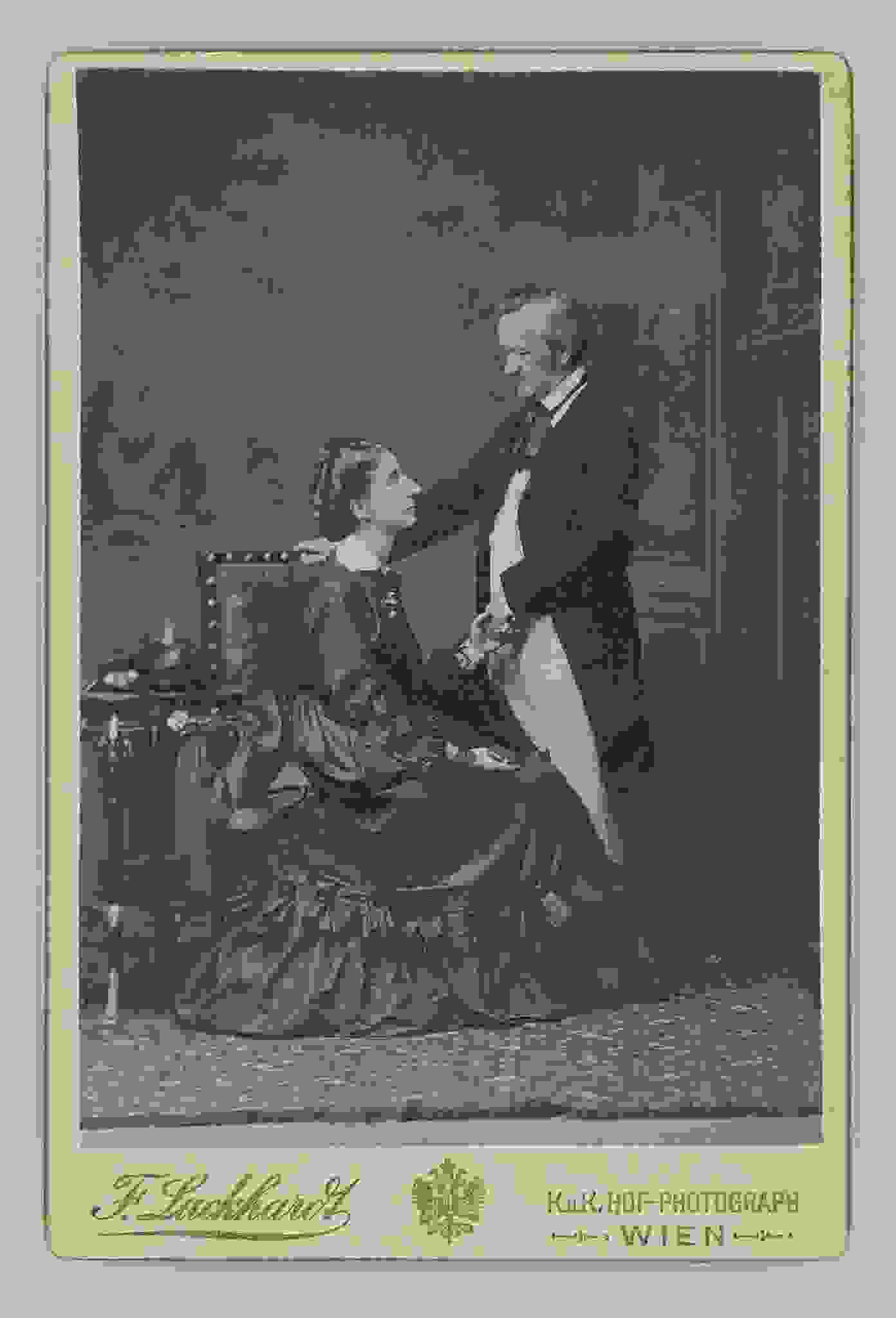
Wedding photograph of Cosima and Richard Wagner

“Our wedding took place at eight o’clock; may I be worthy of bearing R.[ichard]’s name.”

Cosima’s diary entry (1870)

On 25 August 1870, Wagner and Cosima were married in the Protestant parish of St Matthew’s Church. The ceremony was a modest affair, attended only by the couple, the officiating minister Pastor Tschudi, and the two witnesses, Malwida von Meysenbug and Hans Richter.


A few days later, their son Siegfried was baptised. On the first floor of the Tribschen villa, Wagner’s son was baptised under the name Siegfried Helferich Richard Wagner, thereby being formally recognised as a legitimate descendant of the Wagner family.

During Wagner’s years in Tribschen, the villa became a popular gathering place for prominent figures from the composer’s circle of friends. Among the many visitors to the shores of Lake Lucerne were King Ludwig II of Bavaria, Franz Liszt and Friedrich Nietzsche.


In 1872, Wagner left what became known as the “Tribschen Idyll” in order to realise his plans for a festival theatre of his own in Bayreuth.
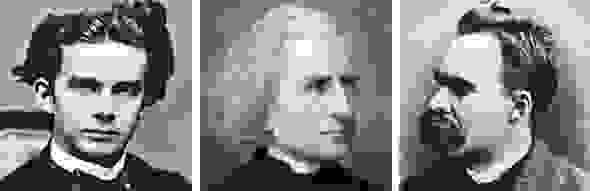
“Tribschen has now come to an end … ah, it was so desolate.”

Friedrich Nietzsche (1872)

Wagner’s Antisemitism

The City of Lucerne commissioned the Swiss Society for History (SGG) to issue a research call under the title “Richard Wagner, Antisemitism and the City of Lucerne”. The results were published in May 2026 and are available here.


Wagner’s antisemitism remains one of the most controversial aspects of his legacy. Visitors can explore this topic in both the museum’s permanent exhibition and the current special exhibition “Taboo Wagner? Jewish Perspectives”.


An excerpt from our audio guide is provided below: In addition to writings on “German Art and Politics”, “Beethoven”, “Conducting”, “The Purpose of Opera”, and other subjects, Wagner also wrote “Das Judenthum in der Musik” (“On Judaism in Music”) while living in Tribschen in 1869. This pamphlet was based on the antisemitic tract of the same title that Wagner had first published in 1850 under the pseudonym “K. Freigedank” in the "Neue Zeitschrift für Musik".


Why did he publish it again? Following the founding of the German Empire, Jews were granted equal rights. As proponents of modern antisemitism sought to oppose this development through their writings, Wagner joined their efforts. He republished the text in an expanded version, this time under his own name. As an influential and highly successful composer, Wagner helped make the antisemitic attitudes of his time socially acceptable. He was an early advocate of the antisemitic movement and was fully aware of this role. Wagner and his wife Cosima, who shared his antisemitic views, openly expressed pride in having been responsible for what they called the “beginning of this struggle”. For example, Wagner promoted the idea that Jews, lacking a nation of their own, were incapable of creating genuine art. In his pamphlet he wrote: “Our entire European civilisation and art [...] have remained a foreign language to the Jew [...]. In this language, in this art, the Jew can only imitate and reproduce; he cannot truly speak poetically or create works of art.”


The reasons for Wagner’s antisemitism are difficult to determine and remain the subject of scholarly debate. It likely originated in the 1840s, when, unlike his Jewish contemporaries Meyerbeer and Mendelssohn, Wagner struggled to achieve major musical success. From that point onwards, he repeatedly attributed his lack of recognition to Jewish influence. He claimed that Jewish composers succeeded only because a press that was, in his view, dominated by Jews ensured favourable reviews.


Yet although Wagner viewed the rise of antisemitism with approval, he also maintained friendships and professional relationships with Jewish individuals throughout his life.


Later perceptions of Wagner and his music were shaped by both his descendants and by Nazi Germany. Adolf Hitler admired Wagner’s music and instrumentalised it for ideological purposes. As a result, Wagner continues to be associated with National Socialism to this day.